
Ketamine creates the neurobiological breakthrough.
Elite psychedelic integration builds the foundation for long-lasting sobriety.
In clinical trials, ketamine combined with psychological therapy produced 66-68% sustained sobriety at 12 months. AletheosMD elevates this protocol: Board-certified physician Dr. Brice Rolston administers medical-grade ketamine.
Former Marine Raider Jon Stevens (Leading Coach, Beond) provides specialized psychedelic integration. Limited to select clients in Michigan, Ohio, Florida, Texas, Arizona, Louisiana and Illinois.
Dr. Brice Rolston
Board-Certified Emergency Medicine Physician, Chief of Staff, Stanford University Alumnus, Division I Athlete
Jon Stevens
Marine Raider Special Operations, Leading Coach at Beond, Psychedelic Integration Specialist
Research-backed protocol
66-68% sustained sobriety (Krupitsky study, KARES trial)
Licensed
MI, OH, FL, TX, AZ, IL, LA
Research Disclaimer
Results from cited clinical studies; individual outcomes vary significantly.
The success rates referenced on this page (66-68% sustained sobriety at 12 months) are derived from published clinical research studies (Krupitsky et al., KARES trial). These results represent outcomes from controlled clinical trials and may not reflect the results achieved by all AletheosMD clients. Individual outcomes depend on numerous factors including severity of alcohol use disorder, medical history, psychological factors, adherence to the protocol, and individual response to treatment. AletheosMD does not guarantee specific outcomes.
WHAT MAKES THE ALETHEOS PROTOCOL PRODUCE LONG-TERM SOBRIETY?
19 Facts About the AletheosMD Protocol

Clinical trial data shows that ketamine combined with psychological therapy produces 66-68% sustained sobriety at 12 months, compared to 22% for standard treatment alone.
The Krupitsky study demonstrated 66% abstinence with ketamine + therapy vs. 22% for standard treatment. The KARES trial (Phase 2, published in American Journal of Psychiatry) showed 68% abstinence with ketamine + mindfulness-based therapy vs. 45% for ketamine alone. Both studies support that integration is essential—ketamine allows the breakthrough, but coaching helps translate insight into sustained behavior change. Individual outcomes vary, and treatment response is not guaranteed.

Psychedelic integration is what facilitates sustained behavioral change after neurobiological breakthroughs
Ketamine creates a window of neuroplasticity—a temporary state where the brain can rewire itself. Without skilled integration support, this window closes without lasting behavioral change. Jon Stevens specializes in translating ketamine insights into sustained transformation through structured integration work.

Jon Stevens is a Marine Raider (Ret.) and Leading Coach at Beond, a premier ibogaine clinic featured on The Joe Rogan Experience, Washington Post, Forbes, NY Post, The Guardian, VICE and more.
His background combines elite performance under pressure (Marine Special Operations) with specialized training in psychedelic integration. He has guided hundreds of clients through plant medicine and ketamine experiences, translating breakthrough moments into lasting behavioral change.

The protocol requires in-person physician administration.
Dr. Rolston and a skilled assistant personally administer intramuscular ketamine in private settings. Telemedicine prescription for at-home use is not offered. Every session occurs under direct physician supervision.

Ketamine is a Schedule III medication that may create a neuroplasticity window.
When administered by a physician in controlled doses, ketamine is believed to temporarily rewire the brain's reward system, making behavioral change neurobiologically possible rather than purely volitional.

All ketamine sessions are conducted at our private, welcoming Michigan retreat.
Clients travel to our Michigan location for the 2-day intensive (Breakthrough Protocol) or 3-day intensive (Concierge tier). Luxury accommodations and private transport are included to ensure complete focus on transformation. No institutional or facility-based treatment. Complete privacy and discretion.

The intensive consists of 2 sessions over consecutive days.
The Concierge tier also includes optional follow-up sessions at Weeks 6 and 10 if clinically indicated, based on recent KARE Phase 2 data showing improved outcomes with additional dosing every 4 weeks.

Medical screening eliminates contraindications before treatment begins.
Full cardiovascular assessment, psychiatric evaluation, and medication review precede any treatment, including ketamine administration. Approximately 20% of applicants are declined on medical grounds.

Each ketamine session lasts 90-120 minutes under continuous monitoring.
Blood pressure, heart rate, oxygen saturation, and capnography are measured throughout. A physician and integration specialist are present for the duration.

Jon Stevens provides on-site integration support during all ketamine sessions.
He is present during the experience to provide guidance, facilitate reflection, and begin the integration process immediately—translating insights into actionable behavioral frameworks before the neuroplasticity window closes.

The protocol includes structured post-intensive integration calls.
Following the ketamine intensive, Jon conducts multiple integration sessions (4 calls for Breakthrough Protocol, additional calls for Concierge tier depending on number of sessions) to ensure insights translate into sustained behavioral change.

Integration begins before the first ketamine session.
Jon meets with clients during the medical evaluation phase to establish rapport, clarify intentions, and prepare for the experience. Ketamine is not administered "cold"—psychological preparation is essential.

The protocol duration is 8 weeks (Breakthrough Protocol) or 16 weeks (Concierge tier).
This extended timeline allows for neurobiological changes to stabilize and new behaviors to become habitual. Transformation is not instantaneous—it requires time and integration work.

Daily accountability is built into the protocol.
Clients engage with structured curriculum and daily exercises between integration calls. This is not passive treatment—active participation is required.

Pharmacological support is available when clinically indicated.
Naltrexone (opioid antagonist), gabapentin (GABA modulator), and acamprosate (glutamate modulator) may be prescribed to reduce cravings and support abstinence during the integration period. Benzodiazepine tapers may be considered for withdrawal if indicated. Medical oversight continues throughout.

The protocol is designed for severe alcohol use disorder.
Clients typically meet DSM-5 criteria for severe AUD (6+ symptoms). This is not a program for "cutting back"—it is designed for people who have tried everything else and desire medical intervention.

Approximately 40% of applicants are declined.
Medical contraindications, psychological unsuitability, or practical barriers (inability to commit to 8-16 weeks, geographic limitations) result in declination. This is not a program for everyone.

Treatment is limited to residents in Michigan, Ohio, Florida, Texas, Arizona, Illinois, and Louisiana.
Dr. Rolston is licensed in these states for telemedicine-based consultation and follow-up care. Clients travel to Michigan for the in-person ketamine intensive, then continue integration via telemedicine from their home state. Expansion to additional states is planned based on demand and licensing timelines.

Capacity is intentionally limited.
Dr. Rolston accepts 2 clients every 2 months for the Medical Foundation tier, and 2 clients per quarter for the Concierge tier. Breakthrough Protocol capacity is higher but still limited to ensure quality of care. This is not a high-volume practice—it is designed for depth, not scale.
The physicians & specialists
Dr. Brice Rolston, MD
Board-Certified Emergency Medicine Physician & Chief of Staff
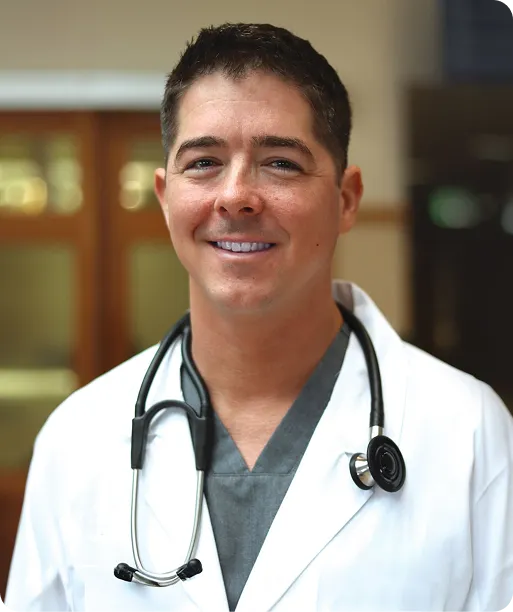
Dr. Brice Rolston is a practicing emergency medicine physician who currently serves as Chief of Staff of his hospital. He has treated over 30,000 patients in more than a decade of practice.
He was on track to have it all. Division I athlete at Stanford University. Top 10 medical school on a full-tuition merit scholarship. MBA from the Ross School of Business at the University of Michigan. Residency at a top academic emergency medicine program. Assistant to an NFL team physician at Stanford Sports Medicine, integrated into the medical staff caring for players, coaches, and their families.
But behind the credentials was a private crisis. A life-altering traumatic event early in his career led to years of guilt, shame, and self-medication with alcohol. On paper, he was thriving — high-performing, decorated, deeply trusted. Internally, he was falling apart.
His own path to resolution gave him firsthand knowledge of what works, what doesn't, and why. That experience—combined with years of witnessing alcohol-related emergencies roll through his ER, patients who had every advantage except an intervention that matched the depth of what was happening in their brains—is what drove him to build AletheosMD.
The name comes from the Greek alētheia, meaning "truth."
Dr. Rolston remains an active emergency physician. He personally designs every treatment plan, personally administers every ketamine session, and personally oversees every client's care.
credentials
Stanford University (Division I Athlete)
Top 10 Medical School, University of Michigan (Full-Tuition Merit Scholarship)
MBA, Ross School of Business, University of Michigan
Emergency Medicine Residency, University of Michigan (Top Academic Program)
Board Certified, American Board of Emergency Medicine
10+ Years Emergency Medicine Practice
30,000+ Patients Treated
Chief of Staff, Michigan Hospital
Former Stanford Sports Medicine Staff, working directly with NFL team (Several Years)
Personal Transformation: Ketamine-Assisted Therapy + Plant Medicine
Licensed: Michigan, Ohio, Florida, Texas, Arizona, Illinois, Louisiana
Jon Stevens
Psychedelic Integration Coach, Marine Raider Special Operator (Ret.)
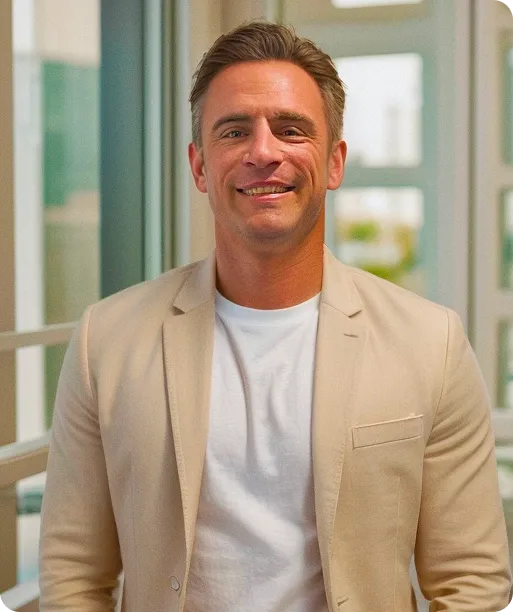
Jon Stevens is the integration coach responsible for translating ketamine breakthrough experiences into sustained behavioral change.
He served as a Marine Raider Special Operator, where he led teams in some of the most demanding and high-stakes environments imaginable. His career was marked by both excellence and adversity. In 2015, during a near-fatal parachute accident, Jon sustained life-altering injuries. While in medical rehabilitation, 7 of his Marine brothers, later known as the "Raider 7", were killed in a tragic helicopter crash.
Instead of being broken by these experiences, Jon chose to rebuild himself. His path to recovery took him through years of physical rehabilitation and ultimately into the world of psychedelic-assisted therapy and plant medicine. That journey gave him not only perspective, but a unique ability to guide others through their own turning points.
Jon now serves as a Leading Coach at Beond, a premier ibogaine clinic, featured on Joe Rogan's podcast and visited by politicians, athletes, and high performers. He has also been featured in a Fox Nation documentary working with veterans through psychedelic therapy. His coaching is direct, grounded, and shaped by the lessons of leading men under fire and rebuilding a life from the ground up.
At AletheosMD, Jon works one-on-one with clients throughout the protocol. He is present during ketamine sessions to provide guidance, facilitate reflection, and begin the integration process immediately. He conducts pre-session intention-setting and leads post-session integration calls. His role is to ensure that insights gained during dissociative states translate into concrete behavioral changes in daily life.
High performers connect with him because he has lived what he teaches: discipline under pressure, courage in the face of fear, and the resilience to rise stronger after setbacks.
credentials
Marine Raider Special Operations
Near-Fatal Parachute Accident (2015), Life-Altering Injuries
Raider 7 Helicopter Crash (7 Marine Brothers Killed)
Leading Coach, Beond (Premier Ibogaine Clinic)
Featured: Joe Rogan Experience (Beond Episode)
Featured: Fox Nation Documentary (Veteran Psychedelic Therapy)
Specialized Training: Psychedelic Integration, Plant Medicine
Psychedelic Integration Coach, AletheosMD
How the AletheosMD Protocol Works
The AletheosMD protocol combines physician-administered ketamine therapy with specialized psychedelic integration to support sustained behavioral change. The protocol unfolds in five phases over 8-16 weeks depending on tier.
Phase 1 | Week 1
Medical Evaluation & Psychological Preparation
Medical Assessment (90 minutes, in-person or telemedicine)
Dr. Rolston conducts a comprehensive medical evaluation including:
Full cardiovascular assessment (EKG, blood pressure monitoring, cardiac history)
Psychiatric evaluation (depression, anxiety, trauma history, suicide risk)
Medication review (contraindications with ketamine, current prescriptions)
Alcohol use history (quantity, frequency, withdrawal risk, previous attempts at sobriety)
Physical examination (liver function, neurological assessment)
Approximately 20% of applicants are medically unsuitable for ketamine therapy. Common contraindications include uncontrolled hypertension, active psychosis, severe cardiovascular disease, or high suicide risk.
Psychological Preparation with Jon Stevens (60 minutes, virtual)
Jon meets with clients to:
Establish rapport and trust
Clarify intentions for the ketamine experience
Discuss what to expect during dissociative states
Prepare mentally for ego dissolution and psychological confrontation
Set the foundation for integration work
Ketamine is not administered without psychological preparation. Clients must be mentally ready for the experience.
Medical Monitoring: Dr. Rolston personally reviews all medical data and makes the final determination on suitability for treatment.
Phase 2 | Week 1 (Days 3-7)
Pre-Intensive Integration
Daily Curriculum Work
Clients begin structured coursework covering:
The neurobiology of addiction
Behavioral patterns and triggers
Identity reconstruction
Accountability frameworks
This work primes the mind for the ketamine experience. Integration begins before the first session.
Jon Stevens Check-In (30 minutes, virtual)
Jon reviews progress on coursework, answers questions, and ensures psychological readiness for the intensive.
Phase 3 | Week 2 (Days 1-2 or 1-3)
Ketamine Intensive
All ketamine sessions are conducted at our private Michigan retreat. Clients travel to Michigan for the immersive intensive. Luxury accommodations and private transport are included. The setting is private, welcoming, and designed for transformation—not institutional or clinical.
Day 1: First Ketamine Session
Pre-session preparation (30 minutes): Jon Stevens conducts intention-setting and final psychological preparation
Ketamine administration (90-120 minutes): Dr. Rolston administers intramuscular ketamine under continuous medical monitoring. Jon Stevens is present throughout to provide guidance and facilitate reflection during the dissociative state
Vital signs monitored every 15 minutes: Blood pressure, heart rate, oxygen saturation, and continuous capnography
Post-session integration (60 minutes): Jon leads immediate integration work, translating insights into actionable frameworks before the neuroplasticity window closes
Day 2: Second Ketamine Session
Same structure as Day 1
Deeper psychological exploration building on Day 1 insights
Jon Stevens present throughout for real-time integration support
Medical Monitoring: Dr. Rolston and medical assistant present for all sessions. Emergency medical equipment on-site. Vital sign monitoring throughout.
Phase 4 | Week 3-8 (Breakthrough Protocol) or Week 3-16 (Concierge Protocol)
Post-Intensive Integration
Structured Integration Calls with Jon Stevens
Breakthrough Protocol: 4 integration calls (Weeks 3, 4, 6, and 8)
Concierge Tier: Up to 8 integration calls (Weeks 1 and 5 pre-intensive, then Weeks 3, 4, 6, 8, 10, 12, 14, 16 post-intensive)
These calls are where breakthroughs become permanent. Jon works with clients to:
Translate ketamine insights into daily behavioral changes
Address challenges and resistance
Reinforce new identity and accountability frameworks
Ensure neurobiological changes stabilize into lasting habits
Physician Check-Ins with Dr. Rolston
Medical Foundation Tier: 4 telemedicine check-ins (Weeks 2, 4, 6, 8)
Breakthrough Protocol: Extended physician support at Weeks 4, 6, and 8
Concierge Tier: Extended physician support at Weeks 4, 6, 8, 12, 16
Dr. Rolston monitors medical status, adjusts pharmacological support if needed, and ensures client safety throughout.
Daily Curriculum Work
Clients continue structured coursework and daily exercises between integration calls. Curriculum includes weekly meetings with Jon to answer deep-dive questions. Active participation is required—this is not passive treatment.
Pharmacological Support (if clinically indicated)
Naltrexone (opioid antagonist) to block alcohol reward pathways
Gabapentin (GABA modulator) to reduce cravings and withdrawal symptoms
Acamprosate (glutamate modulator) to reduce withdrawal symptoms
Benzodiazepine tapers if medically indicated
Medication management overseen by Dr. Rolston throughout protocol
Phase 5 | Weeks 6 & 10 (Concierge Tier Only)
Additional Ketamine Sessions
Optional Follow-Up Ketamine Sessions
Based on recent KARE Phase 2 data showing improved outcomes with additional dosing every 4 weeks, Concierge tier clients have the option for up to 2 additional ketamine sessions at Weeks 6 and 10 if clinically indicated.
These sessions follow the same structure as the initial intensive:
Pre-session preparation with Jon Stevens
Physician-administered ketamine under continuous monitoring
Jon Stevens present throughout for real-time integration support
Post-session integration work
Dr. Rolston determines clinical appropriateness based on client progress and medical status.
Who qualifies for the aletheos protocol?
Medical criteria
Required:
Diagnosis of alcohol use disorder (moderate to severe, per DSM-5 criteria)
Medically stable for ketamine administration (cardiovascular, psychiatric, neurological)
No active psychosis or uncontrolled psychiatric conditions
No contraindicated medications or medical conditions
Resident of Michigan, Ohio, Florida, Texas, Arizona, Illinois, or Louisiana (and willing to travel for in-person ketamine sessions. All other sessions via telemedicine)
Disqualifying Conditions:
Uncontrolled hypertension (systolic >160 mmHg, diastolic >100 mmHg)
Active psychosis, schizophrenia, or severe bipolar disorder
Severe cardiovascular disease (recent MI, unstable angina, uncontrolled arrhythmias)
High suicide risk or active suicidal ideation
Pregnancy or breastfeeding
Allergy to ketamine
Approximately 20% of applicants are medically unsuitable.
Psychological Criteria
Required:
Psychological readiness for ego dissolution and confrontation with suppressed material
Willingness to engage in daily coursework and integration work
Commitment to 8-16 weeks of active participation
Openness to physician and integration specialist guidance
Disqualifying Factors:
Unwillingness to stop drinking during protocol
Inability to commit to full 8-16 week timeline
Resistance to psychological work or integration
Expectation of "passive cure" without active participation
Approximately 20% of applicants are psychologically unsuitable.
Practical Criteria
Required:
Ability to invest $25,000-$100,000 (no payment plans offered)
Able and willing to travel to Michigan for 2-3 days for the immersive intensive
Able to attend all scheduled physician check-ins and integration calls (via telemedicine after intensive)
Commitment to daily coursework and exercises
Disqualifying Factors:
Inability to afford cash-pay investment
Unavailability for in-person intensive
Geographic restrictions (outside licensed states and unwilling to travel)
application process
Submit application
via website form
Initial screening by AletheosMD team
(48-72 hours)
Discovery call with Dr. Rolston
if initial screening passed (30-45 minutes)
Medical evaluation (Week 1)
if discovery call successful
Treatment begins (Week 1)
if medically and psychologically suitable
Approximately 40% of applicants are declined at some stage of this process.
Three tiers based on service level
Tiers 2 and 3 include physician-administered ketamine therapy and specialized psychedelic integration. Tier 1 provides medical foundation and coaching without ketamine.
Tier 1
Medical Foundation – $25,000
For clients who require physician oversight and structured accountability but may not need ketamine therapy.
Duration: 8 weeks
Capacity: 2 clients every 2 months
What's Included:
Medical Oversight:
90-minute medical evaluation with Dr. Rolston (Week 1)
4 telemedicine check-ins with Dr. Rolston (Weeks 2, 4, 6, 8)
Pharmacological support if clinically indicated (Naltrexone, Gabapentin, etc)
Medical monitoring throughout 8-week protocol
Integration & Coaching:
6 coaching sessions with Jon Stevens (Weeks 1-6)
Structured curriculum and daily coursework
Accountability framework and progress tracking
Ideal For:
Clients who may not require ketamine therapy
Clients seeking physician-led medical oversight with structured coaching
Clients who want to establish medical foundation before considering ketamine
Note: This tier does NOT include ketamine therapy. Clients can upgrade to Breakthrough Protocol if ketamine is later deemed clinically appropriate.
Tier 2
Breakthrough Protocol - $40,000
The core AletheosMD protocol: physician-administered ketamine therapy combined with elite psychedelic integration.
Duration: 8 weeks
Capacity: Higher than Tier 1 and Tier 3, but still limited to ensure quality of care
What's Included:
Ketamine Therapy:
2-day ketamine intensive conducted on site (Week 2)
2 physician-administered ketamine sessions under continuous medical monitoring
Jon Stevens present during all ketamine sessions for real-time integration support
Medical Oversight:
90-minute medical evaluation with Dr. Rolston (Week 1)
Extended physician support at Weeks 4, 6, and 8
Pharmacological support if clinically indicated (Naltrexone, Gabapentin, Acamprosate, Benzodiazepines)
Medical monitoring throughout 8-week protocol
Integration Specialist:
Pre-intensive psychological preparation with Jon Stevens (Week 1)
On-site support during all ketamine sessions (Days 1-2)
4 post-intensive integration calls (Weeks 3, 4, 6, and 8)
Structured curriculum and daily coursework
Ideal For:
Clients who are seeking higher rates of success afforded by ketamine therapy
Clients who want physician-led protocol with specialized integration
Clients who value privacy and minimal life disruption (2-day intensive vs. 30-90 day facility)
Note: This tier does NOT include ketamine therapy. Clients can upgrade to Breakthrough Protocol if ketamine is later deemed clinically appropriate.
Tier 3
Concierge Transformation - $100,000
The most comprehensive protocol: extended 16-week integration, additional ketamine sessions, and 24/7 physician access.
Duration: 16 weeks
Capacity: 2 clients per quarter
What's Included:
Everything in Tier 2, plus:
Enhanced Ketamine Protocol:
Up to 2 additional ketamine sessions at Weeks 6 and 10 if clinically indicated (based on KARE Phase 2 data)
Extended Integration:
16-week protocol (vs. 8 weeks in Tier 2)
8 integration calls with Jon Stevens (Weeks 1, 5 pre-intensive, then Weeks 3, 4, 6, 8, 10, 12, 14, 16 post-intensive)
Extended physician check-ins at Weeks 4, 6, 8, 12, 16
Ultra-Premium Service:
24/7 medical support line (direct phone access to Dr. Rolston for urgent concerns)
Family integration session (Week 10) with spouse/partner if desired
Performance optimization consultation (Week 14) covering hormones, metabolic health, longevity
Post-program support (6 months following protocol completion)
Discretion & Concierge Coordination:
Dedicated support for all logistics
Complete discretion and privacy
Priority scheduling and availability
Ideal For:
Clients who want the most comprehensive protocol available
Clients who value extended integration and physician access
Clients for whom discretion, convenience, and white-glove service are paramount
Five Steps from Application to Treatment
Submit application
Complete the application form on this website. Provide:
Contact information
Brief description of alcohol use history
Previous treatment attempts
Current medical conditions and medications
State of residence
Tier of interest
Initial screening by AletheosMD team (48-72 hours)
AletheosMD team reviews application for:
Geographic eligibility (licensed states)
Medical red flags (contraindications)
Psychological suitability (readiness for protocol)
If initial screening is passed, you will be invited to a discovery call with Dr. Rolston.
Discovery call with Dr. Rolston (30-45 minutes)
Dr. Rolston personally speaks with every applicant to assess:
Medical history and current health status
Alcohol use patterns and severity
Previous treatment attempts and outcomes
Psychological readiness and motivation
Mutual fit and expectations
Approximately 40% of applicants are declined at this stage.
Medical evaluation (Week 1)
If discovery call is successful, formal medical evaluation begins:
Comprehensive medical assessment including laboratories (cardiovascular, psychiatric, neurological)
Psychological preparation with Jon Stevens
Final determination of medical and psychological suitability
Approximately 20% of applicants who reach this stage are declined on medical grounds.
Treatment begins (Week 1)
If medically and psychologically suitable, treatment begins immediately:
Daily curriculum work starts
Pre-intensive integration with Jon Stevens
Ketamine intensive scheduled for Week 2